Originally published: 30 January 2025 | Last editorial review: 23 September 2026
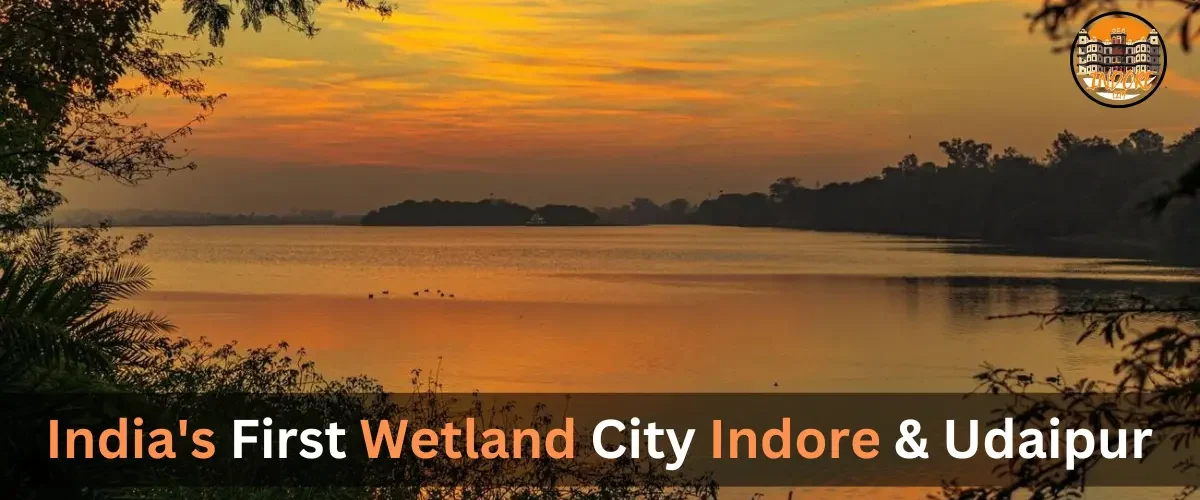
Indore became one of India’s first two accredited Wetland Cities, alongside Udaipur, when the Convention on Wetlands announced 31 newly accredited cities on 24 January 2025. The recognition applies to Indore’s city-level commitment to conserving and wisely using urban and nearby wetlands. It does not mean that the entire city of Indore is a Ramsar Site.
Indore and Udaipur are India’s first two accredited Wetland Cities. In Indore, Sirpur Wetland and Yashwant Sagar are separately designated Ramsar Sites. Wetland City Accreditation applies to the city and its approach to wetland conservation, while Ramsar Site designation applies to defined individual wetlands.
Indore Wetland City: Quick Facts
| What did Indore receive? | Wetland City Accreditation under the Convention on Wetlands |
|---|---|
| When was it announced? | 24 January 2025 |
| Was Indore the first in India? | Yes, jointly with Udaipur as India’s first two accredited Wetland Cities |
| Is the whole city a Ramsar Site? | No. Wetland City Accreditation and Ramsar Site designation are different recognitions |
| Indore’s Ramsar Sites | Sirpur Wetland and Yashwant Sagar |
| Sirpur Wetland | Ramsar Site no. 2478, 161 hectares, designation date 7 January 2022 |
| Yashwant Sagar | Ramsar Site no. 2495, 823 hectares, designation date 7 January 2022 |
| Accreditation period | Normally two Conference of the Contracting Parties cycles, about six years, before renewal |
What Is Wetland City Accreditation?
Wetland City Accreditation is a voluntary international recognition under the Convention on Wetlands. It is designed for cities that demonstrate a positive relationship with wetlands within or near their jurisdiction and show a commitment to conservation and wise use.
The scheme was established in 2015 through Resolution XII.10 and was later updated. It encourages city governments to integrate wetlands into land-use planning, conserve their ecological character, restore or manage wetlands, involve local communities and build public awareness.
The accreditation is not intended to be permanent without review. The framework includes a renewal process after two COP cycles, normally around six years. A city therefore has to continue demonstrating its commitment rather than treating the title as a one-time award.
When Did Indore Become a Wetland City?
The Convention on Wetlands lists Indore and Udaipur among 31 newly accredited Wetland Cities announced at the 64th meeting of its Standing Committee on 24 January 2025.
The Government of India subsequently published a congratulatory statement on 25 January 2025. The two dates refer to different things: 24 January was the accreditation announcement, while 25 January was the Indian government’s public congratulatory communication.
Is Indore a Ramsar Site?
No. Indore is an accredited Wetland City, not one giant Ramsar Site. The distinction is important because the two recognitions apply to different entities.
| Wetland City Accreditation | Applies to a qualifying city and recognises its relationship with, and commitment to, urban and nearby wetlands. |
|---|---|
| Ramsar Site designation | Applies to a defined wetland of international importance with its own site boundary and official record. |
| What this means for Indore | Indore is an accredited Wetland City, while Sirpur Wetland and Yashwant Sagar are separately designated Ramsar Sites. |
The recognition is also not a UNESCO World Heritage title. The Convention on Wetlands is an intergovernmental environmental treaty adopted in Ramsar, Iran, in 1971.
What Are the Six Wetland City Accreditation Criteria?
The Convention’s operational guidance sets six international criteria for cities seeking accreditation. In simplified terms, a candidate city should:
Why Was Indore Recognised?
Wetland City Accreditation recognises more than the mere existence of lakes. It reflects a city’s demonstrated commitment to conserving and wisely using wetlands in or near the urban area.
In Indore’s case, the strongest publicly verifiable context is the presence and ecological importance of Sirpur Wetland and Yashwant Sagar, together with the wider city-level wetland conservation framework.
- Indore has internationally recognised wetland assets.
- Sirpur Wetland has documented ecological and community functions within the urban landscape.
- Yashwant Sagar supports water, agriculture and important bird habitat in Indore district.
- The accreditation evaluates city-level commitment, not only the presence of a lake.
- Continued conservation, monitoring, public participation and responsible planning remain important after accreditation.
The accreditation should not be presented as proof that every environmental problem has been solved, nor should it be used to guarantee tourism growth, grants or future funding.
Sirpur Wetland’s Role in Indore
Sirpur Wetland is a human-made wetland in Indore that has developed near-natural characteristics over time. The Ramsar Sites Information Service identifies it as Site no. 2478, with an area of 161 hectares and a designation date of 7 January 2022.
The official Ramsar site description characterises Sirpur as a shallow, alkaline and nutrient-rich freshwater wetland. That site description records 130 resident and migratory bird species, along with fish, reptiles, amphibians and plant diversity. This number should be understood as part of the Ramsar site description, not as a permanent live bird count.
The site is also described as providing ecosystem services such as flood buffering, microclimate regulation, recreation, education and cultural value.
For practical location, access and visitor information, use our Sirpur Lake Indore guide. Visitor details are kept separate because access conditions and local facilities can change.
Yashwant Sagar’s Role in the Indore Region
Yashwant Sagar is a freshwater reservoir in Indore district. The Ramsar Sites Information Service identifies it as Site no. 2495, with an area of 823 hectares and a designation date of 7 January 2022.
The Convention on Wetlands describes Yashwant Sagar as having been built in the Gambhir River basin in the 1930s for irrigation and drinking-water purposes. It has also been used for aquaculture and is recognised as an Important Bird and Biodiversity Area.
Yashwant Sagar demonstrates why wetland conservation is not only about wildlife. A single wetland landscape may support water supply, agriculture, livelihoods and biodiversity at the same time, which makes long-term management especially important.
Why Do Wetlands Matter to a Growing City?
What Does the Accreditation Require From Indore Now?
Wetland City status should be understood as an ongoing responsibility rather than a one-time announcement.
- Protect wetland boundaries and catchment areas.
- Reduce untreated waste and polluted runoff entering wetlands.
- Monitor water levels, water quality and biodiversity.
- Manage invasive species using appropriate scientific methods.
- Avoid construction that damages important wetland functions.
- Involve residents, researchers and local organisations.
- Provide clear and accurate public information.
- Manage visitors without disturbing nesting or feeding areas.
- Report conservation progress transparently.
These are practical conservation priorities consistent with the Wetland City framework. Specific projects, budgets and results should be attributed to the responsible authority whenever they are reported.
How Can Residents Visit Indore’s Wetlands Responsibly?
- Check current access rules before travelling.
- Keep a respectful distance from birds and nesting areas.
- Do not play loud music or use recorded bird calls to attract wildlife.
- Do not feed birds or other wildlife.
- Use designated bins or carry your waste out.
- Avoid damaging reeds, mudflats and shoreline vegetation.
- Use binoculars or a zoom lens instead of approaching wildlife.
- Follow on-site instructions and report obvious pollution or damage through the appropriate civic channel.
Access, water levels and local rules can change with weather, conservation work and site conditions. Always check current information before visiting Sirpur Wetland or Yashwant Sagar.
Why Is Udaipur Mentioned With Indore?
Udaipur is mentioned because it received Wetland City Accreditation in the same January 2025 group as Indore. Together, Indore and Udaipur became the first two Indian cities to receive this accreditation.
Udaipur has its own lake system and conservation context. For IndoreCity, the useful comparison is the shared national milestone. This page therefore keeps Indore, Sirpur Wetland and Yashwant Sagar as the main focus.
Indore Wetland City Timeline
- 1971: The international wetlands treaty was adopted in Ramsar, Iran.
- 2015: Wetland City Accreditation was established through Resolution XII.10.
- 7 January 2022: Sirpur Wetland and Yashwant Sagar have this recorded Ramsar Site designation date.
- 24 January 2025: Indore and Udaipur were announced among 31 newly accredited Wetland Cities.
- 25 January 2025: The Government of India published its congratulatory statement.
- Future renewal: The city must continue meeting the accreditation framework rather than treating the status as permanent.
What Indore’s Wetland City Status Means in Simple Terms
Indore’s accreditation means the city has received international recognition under the Convention on Wetlands for its relationship with and commitment to urban and nearby wetlands. Sirpur Wetland and Yashwant Sagar are the two Ramsar Sites most directly associated with this local wetland landscape.
The title does not turn all of Indore into a protected wetland, does not replace the individual Ramsar designations of Sirpur and Yashwant Sagar, and does not prove that every environmental challenge has been resolved. Its long-term value depends on continued conservation, responsible planning, monitoring and public participation.
Frequently Asked Questions
Is Indore India’s first Wetland City?
Indore and Udaipur became India’s first two accredited Wetland Cities together. They were included among 31 newly accredited cities announced by the Convention on Wetlands on 24 January 2025.
What is a Wetland City?
A Wetland City is a city recognised under the Convention on Wetlands for demonstrating a strong commitment to the conservation and wise use of wetlands within or near its jurisdiction.
Is Indore itself a Ramsar Site?
No. Indore is an accredited Wetland City. Sirpur Wetland and Yashwant Sagar are the separately designated Ramsar Sites associated with Indore.
Which Ramsar Sites are associated with Indore?
Sirpur Wetland, Ramsar Site no. 2478, and Yashwant Sagar, Ramsar Site no. 2495. Both have a recorded designation date of 7 January 2022.
When did Indore receive Wetland City Accreditation?
Indore’s accreditation was announced on 24 January 2025 during the 64th meeting of the Standing Committee of the Convention on Wetlands.
How long does Wetland City Accreditation last?
The accreditation framework includes renewal after two Conference of the Contracting Parties cycles, normally about six years.
Is Wetland City Accreditation a UNESCO award?
No. It is an accreditation under the Convention on Wetlands, an intergovernmental environmental treaty. It is not a UNESCO World Heritage title.
Can people visit Sirpur Wetland and Yashwant Sagar?
Access conditions can change with local rules, weather, water levels and conservation work. Check current information before travelling and follow on-site conservation instructions.
Official Sources and Fact Check
Core accreditation dates and Ramsar Site details in this guide were checked against the Convention on Wetlands, the Ramsar Sites Information Service and the Government of India. Changing visitor details and changing national Ramsar-site totals are intentionally not presented as permanent facts.
- Convention on Wetlands: Wetland City Accreditation
- Convention on Wetlands: 31 new Wetland Cities announced in 2025
- Press Information Bureau: Government statement on Indore and Udaipur
- Ramsar Sites Information Service: Sirpur Wetland, Site no. 2478
- Ramsar Sites Information Service: Yashwant Sagar, Site no. 2495
- Convention on Wetlands: Wetland City Accreditation operational guidance and criteria
Explore Indore’s Wetland Landscape
Planning a nature-focused visit? Start with our practical Sirpur Lake guide and discover more places around Indore.
Explore Sirpur Lake