Originally published: 27 January 2024 | Last editorial review: 24 September 2026
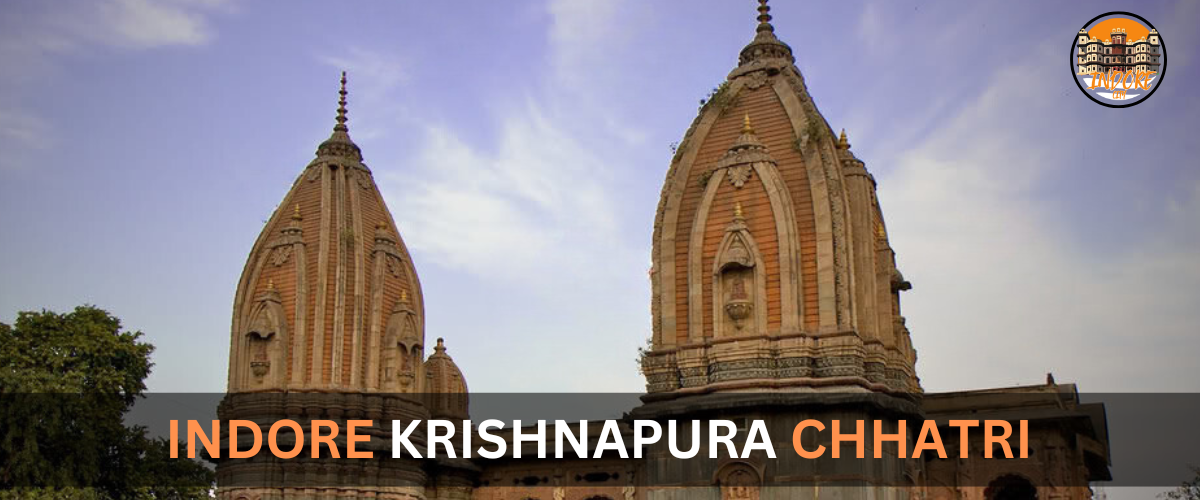
Krishnapura Chhatris Indore are a group of historic Holkar cenotaphs in central Indore, close to Rajwada Palace and the Kanh River. The memorial complex is known for domed pavilions, carved stone pillars, royal statues and its connection with members of the Holkar dynasty.
Current opening hours, entry fee and photography rules were not confirmed from an official public notice during this review. The older article listed 9:00 AM to 5:00 PM, daily opening, free entry and photography permitted, but those details should not be treated as guaranteed current information without local confirmation.
Krishnapura Chhatris Indore: Quick Visitor Guide
| Correct name | Krishnapura Chhatris |
|---|---|
| Alternative spelling | Krishna Pura Chhatris |
| Type | Holkar memorial complex and cenotaphs |
| Location | Central Indore, near Rajwada Palace and the Kanh River |
| Principal memorials | Maharani Krishnabai Holkar, Maharaja Tukoji Rao Holkar II and Maharaja Shivaji Rao Holkar |
| Historical period | Nineteenth-century Holkar era |
| Known for | Domed chhatris, carved pillars, royal statues and riverfront heritage |
| Current timings | Confirm locally before travelling |
| Current entry fee | Confirm locally before travelling |
| Photography | Confirm current rules, especially for tripods, commercial shoots and drones |
| Suggested visit duration | About 30 to 45 minutes |
What Are the Krishnapura Chhatris?
A chhatri is a raised, dome-topped pavilion used in Indian architecture. The word literally refers to an umbrella or canopy, reflecting the shape of the roof.
At Krishnapura, these structures serve as cenotaphs and funerary memorials associated with the Holkar royal family. They are not a palace, and the site should not be described as one single tomb.
Madhya Pradesh Tourism describes the Krishnapura memorials as cenotaphs built in memory of Holkar rulers on or near their cremation sites.
Whose Memorials Are at Krishnapura?
Heritage references identify the three principal chhatris with:
A 2023 heritage report quoting Archaeology Department official Dr Devi Prasad Pandey states that Krishnabai Holkar’s cenotaph was made in 1859, while the memorials of Tukoji Rao II and Shivaji Rao were constructed after their deaths.
When Were the Krishnapura Chhatris Built?
The complex developed during the nineteenth-century Holkar period, but one construction year should not be applied to every structure.
Krishnabai Holkar’s memorial is associated with 1859 in local archaeological reporting. The other principal chhatris commemorate Tukoji Rao II and Shivaji Rao and were built after their deaths.
Architecture of Krishnapura Chhatris
The complex is best understood as a Holkar funerary landscape with a layered architectural vocabulary. Local heritage reporting describes Krishnabai Holkar’s chhatri as combining Maratha, Rajput and Mughal-influenced elements.
Dr Pandey’s account also describes a 36-pillar mandap at Krishnabai Holkar’s chhatri and a high-platform prayer hall linking the memorials of Tukoji Rao II and Shivaji Rao.
Krishnapura Chhatris and the Kanh River
The chhatris stand along the historic Kanh River edge, which forms an important part of the memorial landscape. Madhya Pradesh Tourism describes Krishnapura as one of the Holkar chhatri sites on the riverbank.
The riverfront setting also connects the site with the wider history of water, ghats and public life in old Indore. A 1922 historical photograph reported in 2026 shows residents bathing, collecting water and using boats around the Krishnapura ghats.
Why Are Krishnapura Chhatris Important to Indore?
Rajwada and Krishnapura explain different parts of Holkar heritage. Rajwada represents royal residence and administration, while Krishnapura represents commemoration and remembrance.
The complex is also important because it remains embedded in the living old city. Markets, roads, religious places, heritage buildings and newer infrastructure all surround the memorials.
Krishnapura continues to feature in official and civic heritage walks. World Tourism Day, G20 and other heritage programmes have included the site in routes through historic Indore.
Where Are Krishnapura Chhatris Located?
Krishnapura Chhatris are in central Indore near Rajwada Palace, close to the Kanh River. Madhya Pradesh Tourism places the site roughly half a kilometre from Rajwada.
The old article incorrectly mixed location references by also calling the site “Sneh Nagar.” That has been removed. For navigation, search specifically for Krishnapura Chhatri near Rajwada and confirm the public entrance rather than using only the general Krishnapura locality.
Krishnapura Chhatris Timings and Entry Fee
The older article listed:
- 9:00 AM to 5:00 PM
- Open every day
- Free entry
- Photography permitted
A current official public notice confirming those details was not found during this editorial review. Therefore, this final guide does not repeat them as verified current facts.
| Opening time | Confirm locally |
|---|---|
| Closing time | Confirm locally |
| Weekly closure | Confirm locally |
| Entry fee | Confirm locally |
| Photography | Confirm current rules |
Best Time to Visit Krishnapura Chhatris
For architecture and photography, early morning or late afternoon usually provides softer light and more comfortable temperatures. This is a practical recommendation, not an official access schedule.
October to February is generally more comfortable for walking through central Indore. During the monsoon, rain can affect stone surfaces, roads and the riverfront environment.
How Much Time Do You Need?
Allow around 30 to 45 minutes for the principal memorial structures without rushing. Architecture enthusiasts and photographers may want longer.
A combined Rajwada and Krishnapura heritage walk can take around two to three hours depending on palace access, traffic, market crowds and food stops.
Simple Rajwada and Krishnapura Heritage Route
- Begin at Rajwada Palace.
- Walk towards Krishnapura Chhatris using a current map.
- View the main chhatris, carvings and river-facing side where access is permitted.
- Continue through the old-city heritage area.
- Visit Sarafa Bazaar later in the evening if it suits your schedule.
Visitor Tips
- Confirm public access before travelling specifically for the monument.
- Wear footwear suitable for stone steps and uneven surfaces.
- Do not climb on memorial structures or fragile architectural elements.
- Do not touch or scratch carvings.
- Ask before using tripods, professional equipment or drones.
- Keep the site clean.
- Supervise children near steps and the river-facing edge.
- Respect any prayer, memorial or local religious activity.
- Use original or properly licensed photographs for publication.
Accessibility and Facilities
The historic design includes raised platforms, stone steps and older surfaces, so some sections may be difficult for wheelchair users or visitors with limited mobility.
Before visiting with someone who needs accessible facilities, confirm:
- Ramp or step-free entrance
- Wheelchair movement through the site
- Toilet availability
- Drinking water
- Seating
- Parking or drop-off
- Condition of the river-facing route
Places to Visit Near Krishnapura Chhatris
Frequently Asked Questions
What are Krishnapura Chhatris famous for?
Krishnapura Chhatris are famous for Holkar cenotaphs, domed stone pavilions, carved pillars, royal memorials and their riverfront location near Rajwada Palace.
Is it Krishnapura Chhatri or Krishnapura Chhatris?
Both forms are used, but “Krishnapura Chhatris” is more accurate for the full complex because it contains multiple memorial structures.
Whose memorials are at Krishnapura?
The principal chhatris are associated with Maharani Krishnabai Holkar, Maharaja Tukoji Rao Holkar II and Maharaja Shivaji Rao Holkar.
When were the Krishnapura Chhatris built?
The complex developed during the nineteenth-century Holkar era. Local archaeological reporting dates Krishnabai Holkar’s memorial to 1859, while the chhatris of Tukoji Rao II and Shivaji Rao were built after their deaths.
How far are Krishnapura Chhatris from Rajwada?
Madhya Pradesh Tourism describes them as about half a kilometre from Rajwada Palace, making them practical to combine in one heritage walk.
What are the opening timings?
A current official timing notice was not verified during the latest review. The old article listed 9:00 AM to 5:00 PM, but confirm locally before travelling.
Is there an entry fee?
A current official entry fee was not verified. The older article described entry as free, but confirm locally before making a special trip.
Can I take photographs?
Casual photography may be possible, but current rules for cameras, tripods, commercial shoots and drones should be confirmed locally.
Sources and Editorial Verification
The final guide uses Madhya Pradesh Tourism for the site’s role as a Holkar memorial complex and its location near Rajwada, while detailed memorial and architectural information was cross-checked against reporting that quotes a Madhya Pradesh Archaeology Department official. Current timings, fees and photography rules remain unverified and are therefore not presented as fixed facts.
- Madhya Pradesh Tourism: Heritage Walk in Indore
- Madhya Pradesh Tourism: Indore Destination Brochure
- Free Press Journal: Krishnapura Chhatri heritage report quoting Archaeology Department official Dr Devi Prasad Pandey
Explore More of Old Indore
Combine Krishnapura Chhatris with Rajwada Palace, Sarafa Bazaar and other major Holkar-era landmarks.
Explore Rajwada Palace